
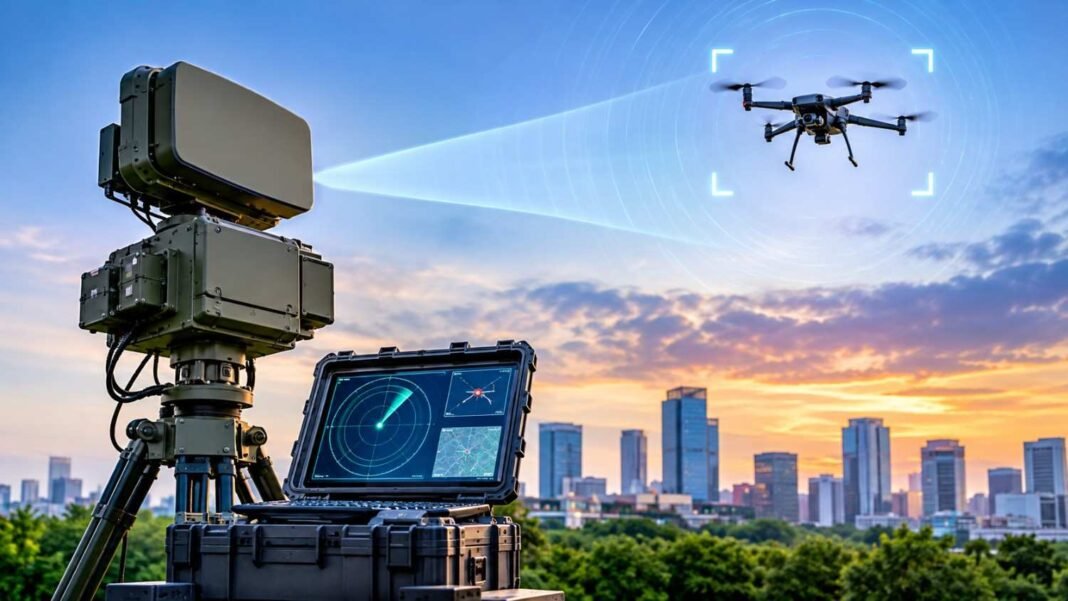
Border security involves monitoring extensive geographical areas, changing terrain, transport routes, and sensitive locations. Traditional surveillance methods remain important, but the increasing use of unmanned aerial vehicles has introduced another challenge. An anti drone system can support border security planning by helping authorised agencies monitor aerial activity and develop a clearer understanding of potential threats.
Why Aerial Monitoring Matters Along Borders
Border regions often include mountains, open land, agricultural areas, roads, and settlements. These different environments can make continuous surveillance difficult.
Unauthorised drone activity may raise concerns involving:
- Surveillance of sensitive locations.
- Unauthorised entry into restricted airspace.
- Smuggling and illicit transportation.
- Monitoring of security infrastructure.
- Potential disruption of border operations.
Aerial awareness can therefore complement ground-based monitoring and established security procedures.
The Importance of Understanding Terrain
Border protection cannot rely on a uniform security arrangement across every location.
Mountainous regions, desert environments, coastal areas, and populated border zones present different monitoring requirements.
Security planners should assess:
- Geographic coverage requirements.
- Existing radar and surveillance infrastructure.
- Weather and environmental conditions.
- Communication availability.
- Coordination between monitoring units.
This assessment helps organisations select suitable fixed, mobile, and portable protection arrangements.
Connected Systems for Better Border Awareness
A connected counter drone system can bring information from multiple monitoring resources into a coordinated operational environment.
This can help authorised teams understand aerial activity across different locations and maintain situational awareness.
Indrajaal’s published portfolio includes Indrajaal Border, Indrajaal Ranger, and its SkyOS™ command-and-control platform.
These offerings reflect different elements of a wider counter-UAS architecture, including border-oriented protection, mobile deployment, and centralised information management.
Why Mobile and Fixed Capabilities Can Complement Each Other
Permanent installations can support monitoring at designated locations, while mobile platforms can address changing patrol requirements.
Portable equipment may also support selected teams where a compact deployment approach is needed.
Combining these capabilities can provide flexibility, provided the systems are properly integrated and operated within the applicable legal framework.
Building Sustainable Border Security
Long-term aerial security requires more than installing equipment.
Agencies should also focus on personnel training, communication procedures, maintenance, information sharing, and coordination with relevant authorities.
Regular evaluation helps ensure that security arrangements remain suitable as drone technology and operational requirements change.
Frequently Asked Questions
1. Why are drones a concern for border security?
Unauthorised drones may be used for surveillance, illicit transportation, or activities that create safety and security risks.
2. Can mobile systems support border monitoring?
Mobile counter-UAS platforms can provide additional flexibility for suitable patrol and monitoring requirements.
3. What is the role of SkyOS™ in aerial security?
Indrajaal describes SkyOS™ as an AI-enabled C5ISRT platform that connects counter-drone equipment within a unified command system.
4. Is drone detection sufficient for border protection?
Detection is important, but effective protection also requires tracking, identification, threat assessment, and an appropriate authorised response.

