
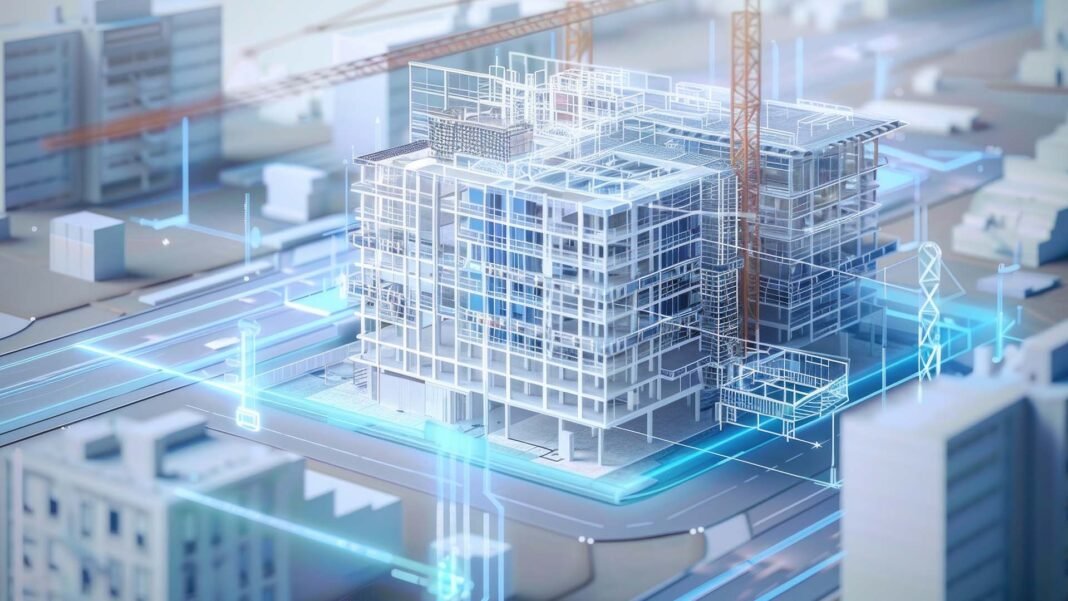
The health service has played a special role in the construction industry in general. Unlike commercial buildings or residential properties, hospitals are typically state-of-the-art environments where architecture, engineering, time, and patient care must work in optimum harmony. As demand for better clinical centers continues to grow across the U.S., mission stakeholders are increasingly adopting BIM for U.S. healthcare projects to navigate the evolving complexity of healthcare design with greater confidence and accuracy.
Building information modeling (BIM) has transformed the way healthcare projects are designed, coordinated, and delivered. Rather than relying on fragmented drawings and remote documents, BIM establishes a centralized digital version that integrates architectural, structural, mechanical, electrical and plumbing facts in a collaborative environment. As the demand for advanced medical facilities continues to rise across the country, project stakeholders are increasingly adopting BIM for Healthcare Projects in the USA to navigate the growing complexity of healthcare construction with greater confidence and precision.
The Increasing Complexity of Healthcare Construction
Modern hospitals are no longer simple healthcare facilities; they are technologically advanced ecosystems designed to support a diverse range of medical services. Surgical suites, intensive care units, diagnostic laboratories, imaging departments, pharmacies, emergency rooms, and specialized treatment areas all require distinct environmental controls, equipment layouts, and infrastructure systems.
Coordinating these diverse elements through conventional design methods often results in communication gaps, inconsistent documentation, and unforeseen conflicts during construction. Even a minor discrepancy between structural components and building services can delay installation schedules, increase project costs, and compromise operational efficiency.
BIM addresses these challenges by creating a comprehensive digital representation of the facility where every discipline contributes to the same coordinated model. Instead of reacting to problems during construction, project teams identify and resolve issues while the project remains in its virtual stage.
Delivering Greater Design Precision
Precision is fundamental in healthcare construction. Medical equipment often demands exact spatial clearances, while building systems must comply with stringent healthcare regulations and performance standards. Traditional two-dimensional drawings make it difficult to visualize these complex relationships, increasing the possibility of inconsistencies between project disciplines.
Building Information Modeling transforms this process by allowing designers to develop intelligent three-dimensional models containing both geometric and data-rich information. Every revision automatically updates throughout the project, ensuring architects, engineers, and contractors always work with the latest design information.
This coordinated workflow significantly improves design accuracy while reducing repetitive revisions and documentation errors that traditionally consume valuable project time.
Improving Collaboration Among Project Teams
Healthcare developments involve numerous stakeholders working simultaneously toward a common objective. Architects, structural consultants, MEP engineers, medical planners, contractors, facility managers, and hospital representatives must continuously exchange information throughout design and construction.
Without a centralized platform, maintaining consistency across multiple disciplines becomes increasingly difficult.
BIM fosters collaboration by providing a shared digital environment where every stakeholder contributes to an integrated project model. Design modifications become immediately visible to the entire team, allowing informed discussions before construction activities begin.
The result is improved communication, faster approvals, enhanced transparency, and significantly fewer coordination issues throughout project delivery.
Detecting Problems Before They Become Expensive
Hospitals contain some of the most intricate building service networks found in modern construction. HVAC systems, medical gas pipelines, electrical conduits, plumbing lines, fire protection systems, and communication infrastructure must coexist within highly constrained ceiling spaces and service corridors.
Discovering clashes after installation begins often leads to costly demolition, redesign, and schedule disruption.
BIM introduces automated clash detection, enabling project teams to identify conflicts digitally before construction starts. Engineers can modify layouts within the virtual environment, ensuring every building system integrates efficiently before materials arrive on-site.
This proactive approach minimizes rework, reduces material waste, and protects project budgets while maintaining construction quality.
Enhancing Construction Planning
Successful hospital construction extends beyond accurate design. Construction sequencing must also accommodate logistical challenges, equipment deliveries, workforce coordination, and, in many cases, ongoing hospital operations.
Through scheduling integration, BIM enables contractors to visualize every stage of construction before physical work begins. Teams can evaluate site logistics, coordinate subcontractors, optimize resource allocation, and anticipate potential scheduling conflicts.
This level of planning improves productivity while minimizing unnecessary interruptions, helping projects remain on schedule even under demanding construction conditions.
Better Cost Management Throughout the Project
Healthcare facilities represent substantial long-term investments. Owners require dependable cost forecasting throughout planning and construction to maintain financial control.
BIM supports this objective by generating accurate material quantities directly from the digital model. As the design evolves, quantity calculations automatically update, providing estimators with reliable data for budgeting and procurement.
Improved cost visibility enables project teams to compare alternatives, reduce unnecessary material procurement, limit waste, and make financially informed decisions throughout the project’s duration.
Supporting Regulatory Compliance
Healthcare buildings operate under rigorous regulatory frameworks designed to protect patients, medical staff, and visitors. Compliance extends far beyond structural integrity and encompasses accessibility, fire protection, infection control, ventilation performance, emergency circulation, and numerous healthcare-specific standards.
BIM enables designers to evaluate compliance throughout the design process rather than waiting until construction is underway. Equipment clearances, accessibility routes, emergency exits, and service coordination can all be validated within the digital model.
Identifying potential compliance issues early significantly reduces approval delays while mitigating construction risks.
Improving Facility Operations Beyond Construction
The value of BIM extends well beyond project completion. Once construction concludes, the digital model becomes a comprehensive repository containing detailed information about every building component, including equipment specifications, maintenance procedures, warranties, and asset locations.
Facility managers can access this information whenever repairs, maintenance, or future renovations are required, eliminating the need to search through extensive documentation.
For hospitals operating around the clock, this readily accessible information contributes to more efficient maintenance planning, reduced downtime, and improved lifecycle management of critical infrastructure.
The Importance of Accurate Existing Building Data
Many healthcare projects involve renovations or expansions within operational hospitals rather than entirely new developments. In these situations, precise knowledge of existing building conditions is essential to avoid unforeseen complications.
Collaborating with an experienced Scan to BIM Service Provider in the USA allows project teams to convert laser-scanned site data into accurate digital models that reflect actual building conditions. This process minimizes uncertainty during renovation planning, improves coordination between new and existing structures, and substantially reduces the likelihood of field modifications during construction.
Conclusion
Healthcare construction demands exceptional precision, interdisciplinary collaboration, and long-term operational foresight. Building Information Modeling has fundamentally transformed how hospitals are planned, designed, constructed, and managed by replacing fragmented workflows with an integrated digital process.
From improving design coordination and clash detection to strengthening cost control, construction planning, regulatory compliance, and facility management, BIM empowers project teams to deliver healthcare facilities that are efficient, resilient, and future-ready. As medical infrastructure continues to evolve across the United States, organizations that embrace BIM will be better equipped to construct hospitals capable of supporting advanced healthcare delivery for decades to come.

