
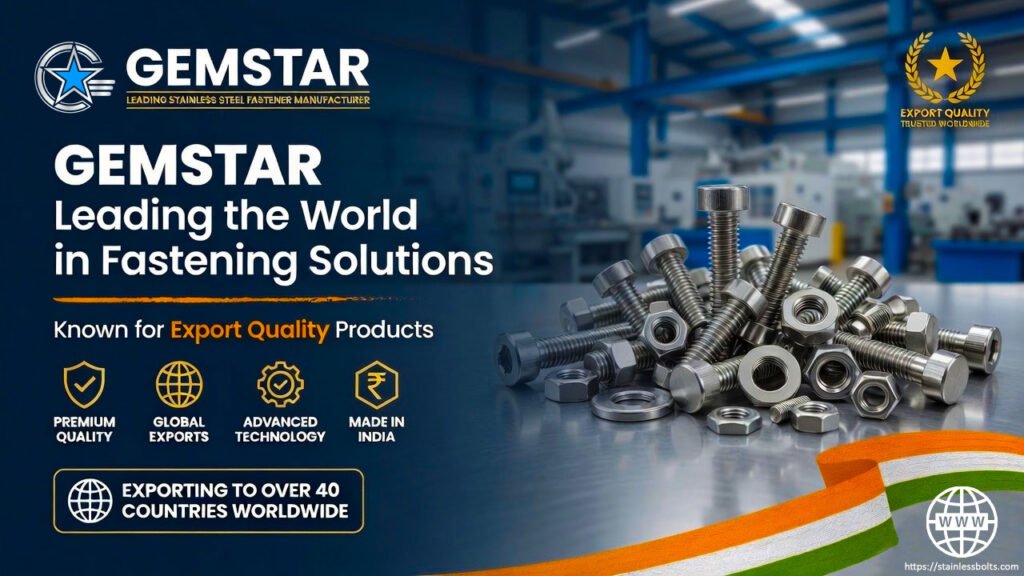
A fastener may be one of the smallest components in an industrial assembly, but its role can be critical to structural integrity, durability, and long-term performance. From construction and engineering to automotive, chemical processing, food equipment, and general manufacturing, Stainless Steel Fasteners provide a practical solution where strength, corrosion resistance, and dependable joining are required. For buyers evaluating stainless steel fasteners India, choosing the right product and supplier is essential for achieving consistent results.
Quality fasteners are not simply about selecting a bolt or nut that fits a thread. Material grade, dimensions, mechanical properties, surface finish, application environment, and manufacturing standards all influence performance. Businesses can explore a broad range of Stainless Steel Fasteners for different industrial and engineering requirements while evaluating specifications carefully before purchasing.
Why Stainless Steel Fasteners Are Widely Used
Stainless steel is valued for its ability to withstand corrosion while maintaining useful mechanical properties in many environments. This makes stainless steel fasteners suitable for applications where ordinary carbon-steel hardware may require additional protection or more frequent replacement.
Common advantages include:
- Good resistance to corrosion and oxidation
- Durable performance in demanding environments
- Low-maintenance characteristics
- Clean and professional appearance
- Availability in different grades and configurations
- Suitability for indoor and outdoor applications
- Compatibility with many industrial assemblies
However, stainless steel is not a single material with identical properties. Different grades are designed for different performance requirements, so selecting the correct grade is an important part of the purchasing process.
Understanding Stainless Steel Fastener Grades
One of the most important decisions when buying fasteners is selecting the appropriate stainless steel grade.
304 Stainless Steel
Grade 304 is widely used for general-purpose applications where good corrosion resistance and fabrication characteristics are required. It can be found in construction, machinery, food-related equipment, architectural applications, and general engineering.
316 Stainless Steel
Grade 316 contains molybdenum and is often selected when greater resistance to corrosion is required, particularly in environments involving chlorides or more aggressive exposure.
ASTM’s current F593 specification covers stainless steel bolts, hex cap screws, and studs and includes several stainless steel alloy groups, including 304/304L and 316/316L grades. The standard also addresses chemical and mechanical requirements.
Other Stainless Steel Grades
Depending on the application, buyers may encounter grades such as 321, 347, 410, 431, and precipitation-hardening stainless steels. These materials can offer different combinations of strength, temperature resistance, hardness, or corrosion performance.
The correct choice should always be based on the actual operating environment rather than assuming that every stainless steel fastener provides the same performance.
Stainless Steel Fasteners India: What Buyers Should Consider
The Indian industrial market serves a wide range of sectors, from infrastructure and renewable energy to process equipment, automotive manufacturing, fabrication, and engineering.
When sourcing stainless steel fasteners India, procurement teams should evaluate more than price. A reliable supplier should be able to provide clear information about material, dimensions, standards, quantity, and application suitability.
Before placing an order, consider:
- Required fastener type
- Stainless steel grade
- Thread specification
- Diameter and length
- Head configuration
- Mechanical requirements
- Surface finish
- Operating temperature
- Exposure to moisture or chemicals
- Applicable industry standards
This approach helps reduce the risk of selecting a fastener that appears suitable but does not perform adequately under actual service conditions.
Types of Stainless Steel Fasteners
Industrial fastening requirements vary significantly, which is why manufacturers and suppliers offer many different product types.
Bolts and Screws
Bolts and screws are used to create detachable mechanical joints. Their selection depends on thread type, head style, dimensions, load requirements, and installation method.
Nuts
Nuts are paired with compatible externally threaded fasteners to create secure mechanical connections. Hex nuts, lock nuts, flange nuts, and other configurations are available for different applications.
ASTM F594 specifies requirements for stainless steel nuts and covers multiple alloy groups, including common austenitic, ferritic, martensitic, and precipitation-hardening stainless steels.
Washers
Washers distribute load, protect mating surfaces, and can assist with specific assembly requirements. Flat washers, spring washers, and specialized designs are used depending on the application.
Studs and Threaded Components
Studs can be useful in assemblies where repeated installation and removal are required or where specific fastening arrangements call for a threaded rod-like component.
What to Look for in Stainless Steel Fasteners Manufacturers
Choosing experienced stainless steel fasteners manufacturers can make a significant difference in product consistency and supply reliability.
A professional manufacturer should demonstrate attention to:
Material Traceability
Buyers should be able to obtain appropriate material information and documentation when required for critical applications.
Dimensional Accuracy
Consistent thread dimensions, lengths, diameters, and head profiles are essential for proper assembly.
Quality Control
Manufacturing and inspection procedures should address relevant chemical, mechanical, dimensional, and surface requirements.
Product Range
A broad product range can simplify procurement when a project requires multiple fastener configurations.
Technical Support
A knowledgeable supplier should be able to discuss material grades, specifications, and application requirements instead of simply quoting a price.
ASTM notes that fastener standards are used to specify, test, and evaluate properties such as material, dimensions, mechanical performance, and metallurgical characteristics.
How to Match Fasteners to the Application
Selecting a fastener begins with understanding the environment in which it will operate.
Outdoor Construction
Exposure to rain, humidity, and changing temperatures makes corrosion resistance an important consideration.
Marine and Coastal Environments
Salt and chloride exposure can be particularly demanding. A suitable stainless steel grade should be selected based on the specific environmental conditions.
Food and Processing Equipment
Fasteners may need to withstand frequent cleaning, moisture, and hygienic operating requirements. Material selection and surface condition should therefore be considered carefully.
Chemical and Industrial Applications
The presence of chemicals, elevated temperatures, or aggressive media may require specialized alloys rather than a general-purpose stainless steel grade.
Heavy Engineering
Mechanical strength, thread integrity, load requirements, and operating conditions become especially important in demanding engineering assemblies.
Why Product Specifications Matter
A fastener’s appearance cannot tell you everything about its performance. Two products may look almost identical while having different material grades or mechanical properties.
When comparing suppliers, request relevant details such as:
- Material grade
- Product dimensions
- Thread standard
- Applicable specification
- Mechanical properties
- Surface finish
- Testing or inspection documentation
- Packaging and identification details
For critical projects, procurement and engineering teams should establish acceptance criteria before ordering. This makes supplier comparisons more objective and helps ensure consistency between batches.
Avoiding Common Fastener Purchasing Mistakes
Several common mistakes can increase project costs or create assembly problems.
Choosing Only by Price
A cheaper fastener may not provide the required grade, consistency, or documentation. Compare total value rather than unit price alone.
Assuming All Stainless Steel Is Equivalent
Grade selection matters. 304 and 316, for example, should not automatically be treated as interchangeable for every environment.
Ignoring Thread Compatibility
A mismatch in thread form, pitch, diameter, or tolerance can make otherwise good fasteners unsuitable.
Ordering Without Confirming Specifications
Always verify dimensions, grade, quantity, and applicable standards before finalizing an order.
Neglecting Application Conditions
Temperature, humidity, chemicals, salt exposure, vibration, and mechanical loads can all influence fastener selection.
Building a Reliable Fastener Supply Chain
For manufacturers, contractors, and engineering companies, dependable supply is as important as product quality. Delayed fasteners can hold up assembly lines, fabrication projects, maintenance work, and construction schedules.
Working with established stainless steel fasteners manufacturers can help businesses develop more predictable procurement processes. Consistent product specifications, repeatable quality, clear communication, and dependable delivery all contribute to a stronger supply chain.
For buyers looking for a broad selection, Stainless Steel Fasteners can be evaluated according to the required application, dimensions, grade, and industry specifications.
Stainless Steel Fasteners are essential components across modern construction, engineering, manufacturing, and industrial applications. Their corrosion resistance, durability, and availability in different grades make them suitable for a wide range of demanding environments.
However, choosing the right product requires more than selecting stainless steel by name. Buyers should evaluate the material grade, dimensions, thread compatibility, mechanical requirements, environmental exposure, applicable standards, and supplier capabilities.
When sourcing stainless steel fasteners India, partnering with dependable stainless steel fasteners manufacturers can provide greater confidence in product consistency and long-term supply. Take the time to compare specifications and communicate your application requirements clearly before ordering. The right fastener may be a small part of the overall assembly, but selecting it correctly can make a significant difference to reliability, safety, and service life.

